March 19, 2024
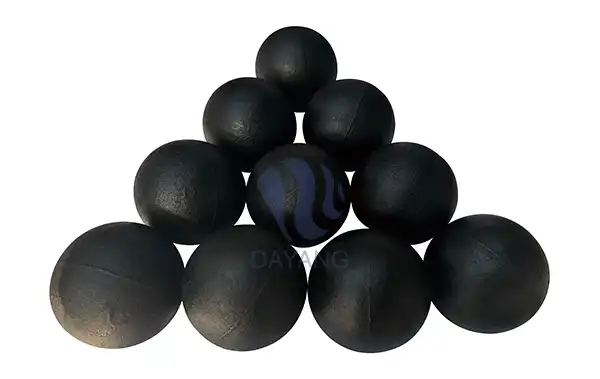
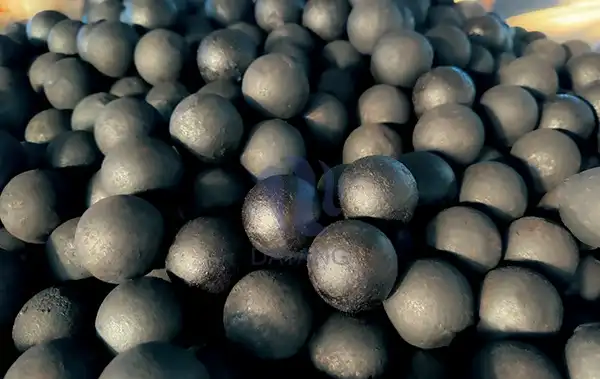
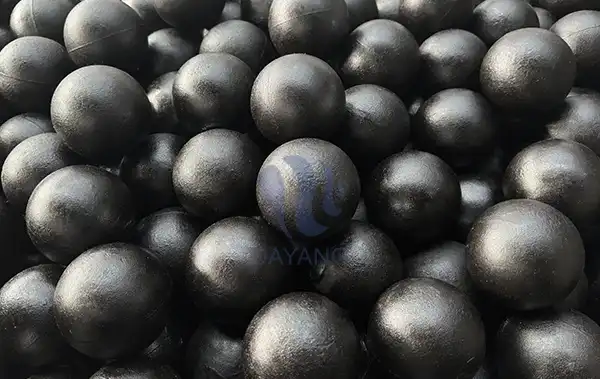
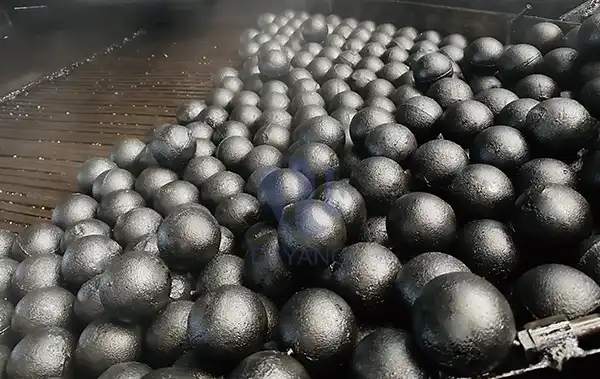
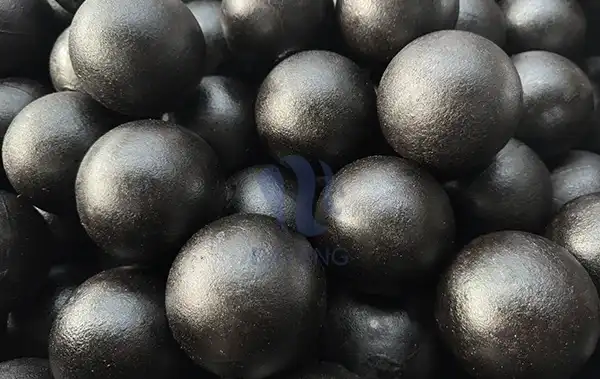
Deployed in a cement clinker grinding mill, these high-chromium cast grinding balls feature stable hardness and low breakage. They help us maintain consistent grinding output and lower long-term consumable costs.
Nov 27, 2026
Grinding cylpebs create a more uniform particle size distribution because their cylindrical sides can touch the feed along a line instead of a single point. That contact gives mid-size particles more chances to break, so fewer coarse grains and excess fines leave the mill. Uniform dimensions also keep the charge consistent from one batch to the next. Mill speed, filling level, liners, and classifier settings still shape the final result, so the media must match the mill. This article explains how the effect works, which factors matter, and how to choose chromium-alloy grinding cylpebs for cement, mining, chemical, and coal applications.
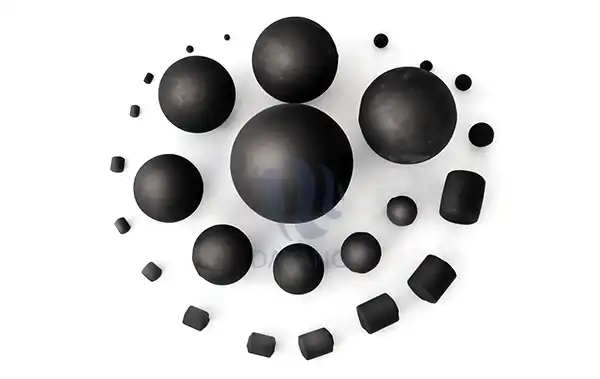
Grinding cylpebs are short cylindrical pieces of grinding media. Sizes are usually written as diameter by length, so a 1010 piece measures 10 mm across and 10 mm long, and a 5060 piece measures 50 mm across and 60 mm long. Geometry separates cylpebs from balls in two ways. First, a cylpeb with equal diameter and length has about 1.5 times the volume of a ball with the same diameter, so it weighs about 1.5 times as much in the same alloy. Second, a sphere touches its neighbor at a point, while a cylinder can touch along a line. Those two facts shape how the media move in the mill and how they break particles.
Our product is Chromium Grinding Cylpebs, cylindrical chromium-alloy casting media made of ferrous metal. We publish four grades: ZDCr15-26, ZDCr12, ZDCr5-8, and ZDCr2. ZDCr15-26 reaches HRC 60 or higher with an impact value of 4.0 J/cm2 or higher. ZDCr2 reaches HRC 45 or higher with an impact value of 2.0 J/cm2 or higher. Size, hardness, and surface treatment can be customized. Published features include uniform size and shape, high grinding efficiency, and wear resistance. The cylindrical shape gives strong contact with the material, uniform dimensions keep results repeatable, and a low breakage rate limits contamination and protects product purity. Together these features support efficient particle breakage and finer grinding.
We supply grinding cylpebs for four main uses. Mining plants grind gold, copper, and iron ores. Cement plants grind clinker and gypsum. Chemical processors grind chemicals and pigments. Power plants grind coal. Each use sets a different balance between impact and abrasion. A dry cement mill differs from a wet ore mill with slurry, and a coal mill differs from both. For that reason, the grade and size must match the feed, the mill design, and the target fineness. Cylpebs are not a universal replacement for balls, and we tell buyers so plainly before they place an order, because the wrong match wastes media and energy.

Inside a tumbling mill, particles escape breakage when they sit between media that touch only at points. Line contact gives a longer zone where particles get nipped, compressed, and abraded. Mid-size particles, which can pass through a ball charge without breaking, meet more contact area. Grinding cylpebs can therefore leave fewer coarse particles in the product and avoid some of the excess fines that repeated hard impacts create. Lameck, Kiangi, and Moys studied media shape in a dry ball mill and published the work in Minerals Engineering in 2006. They reported that media shape changes load behavior and mill power, which shows that shape alters how the charge moves.

One size rarely suits every particle. Large cylpebs deliver more impact energy for coarse feed, and small ones add contact frequency for fine grinding. A graded charge combines sizes, for example grinding cylpebs within the 1010-5060mm range. Uniform dimensions inside each size class matter just as much. If pieces in one class vary in length or diameter, the charge packs unevenly and wear rates differ. Tight dimensions keep the charge stable between top-ups, so the product curve stays repeatable from shift to shift. We make uniform size and shape a core feature of our Chromium Grinding Cylpebs for this reason, and we discuss tolerances with you when you send a drawing.
Shape does not guarantee uniformity. Kiangi, Potapov, and Moys compared discrete element simulations with a dry pilot mill in Minerals Engineering in 2013 and found that media shape affects load behavior and power draw. Mill conditions still matter. Wills' Mineral Processing Technology, 2016 edition, gives ball mill operating speeds of roughly 65 to 80 percent of critical speed. Below that range, impact energy falls. Near critical speed, media start to centrifuge against the shell. Liners, feed top size, moisture, and classifier cut point also move the product curve. We recommend a plant trial with measured particle size data before any large order of grinding cylpebs.
Hardness resists abrasion, and toughness resists cracking. Raising one often lowers the other, so each grade must fit its duty. Our ZDCr15-26 grade pairs HRC 60 or higher with an impact value of 4.0 J/cm2 or higher, suited to abrasive work. ZDCr2 runs at HRC 45 or higher with 2.0 J/cm2 or higher. Aldrich's 2013 review in Minerals Engineering lists abrasion, impact, and corrosion as the wear mechanisms of steel grinding media. A wet ore mill adds corrosion, while a dry cement mill leans on abrasion and impact. Match the grade to the dominant mechanism in your mill, not to the hardness number alone. Choose grinding cylpebs by wear data from your own mill.
Uniform results start in the foundry. Our process covers raw material selection, precise heat treatment, forming, grinding and polishing, and quality control at each stage. Heat treatment sets hardness and toughness. Forming controls diameter, length, and end shape. Poor control leaves porosity, cracks, or uneven hardness, and those defects cause unpredictable wear and uneven packing in the mill. Our factory holds ISO9001 certification and runs a fully automated production line with a 50,000-ton annual capacity. Buyers who send a size drawing should ask about tolerances and how each batch is checked. We answer those questions before an order, so you know what to expect from the grinding cylpebs that arrive.
Each media type suits a different duty. Steel balls deliver strong point impact and often fit coarse grinding. Cylpebs offer line contact and heavier pieces at the same diameter, which suits controlled reduction in suitable mills. Ceramic media fit high-purity products where metal contamination is unacceptable, though their impact resistance and cost differ. When buyers compare grinding cylpebs with these options, cost per tonne of finished product gives a fairer measure than purchase price. Include media consumption, product quality, and process stability in that comparison. Fuerstenau and Abouzeid discussed the energy efficiency of ball milling in the International Journal of Mineral Processing in 2002, and their work shows that media size and mill conditions influence it.
Start with your mill data. Record the material, feed top size, target product size, throughput, circulating load, and whether the mill grinds wet or dry. Then pick the cylpeb dimensions. Larger pieces suit coarse feed, and smaller pieces suit fine grinding. Keep the length-to-diameter ratio in mind, because it changes piece weight and packing. If you send us a drawing, we confirm whether the custom size is possible and discuss hardness and surface treatment. A request that lists mill diameter and length, filling level, speed, and current media wear gives us enough to recommend a grade. A trial order of grinding cylpebs then lets you compare fineness, power, and wear against your current charge.
Once the charge is in, hold the variables steady. Watch mill speed, filling level, feed top size, moisture or slurry density, circulating load, and power draw. Avoid overloading, because a packed charge restricts media movement. Measure P80 or residue on a fixed sieve at regular intervals, and record every media addition. Cascading motion supports steady grinding, while excessive speed pushes media toward centrifuging. Change one variable at a time so the cause of any shift stays clear. When you adjust the grinding cylpebs charge, change it in small steps and let the mill reach steady operation before you judge the data.
Calculate media consumption as the mass of media added divided by the tonnes of material processed, and report it in grams or kilograms per tonne. Use a long, consistent production period so temporary feed changes do not distort the result. Aldrich's 2013 review in Minerals Engineering shows that wear depends on mill conditions as well as media quality. Then convert the result to cost per tonne of finished product by adding media price, freight, handling, downtime, and rejected pieces. A lower purchase price loses its advantage if pieces wear faster or break. Compare grinding cylpebs suppliers on the same mill over the same period to get a fair result.
Most disappointing trials trace back to a few causes. Buyers pick media by hardness alone, choose a size that is too large or too small, or overlook speed, liners, and filling. Oversized pieces leave too few contact points for fine grinding, while undersized pieces lack impact for coarse feed. Dimensional variation, porosity, and cracks cause unpredictable wear. A short trial can also mislead when old media remain in the mill, the feed changes, or the classifier runs unstably. When grinding cylpebs fall short, run several production cycles and compare them with the same laboratory method. That approach separates media effects from system effects.
A good grinding cylpebs manufacturer asks questions before quoting. We review mill dimensions, feed material, target fineness, speed, and current media performance. Our company has made wear-resistant materials for more than thirty years, and we supply casting grinding balls and cylpebs in different sizes and chromium contents. Our service runs in three stages. Before the sale, we learn your requirements and build a suitable product solution. During production, we report progress, refine solution details, and coordinate delivery. After delivery, we track product use, give technical support, and help evaluate and adjust the solution. Buyers in cement, mining, or coal can also ask for chemical composition, hardness data, and dimensional inspection records, and we discuss which records suit the order.
Follow a simple sequence. Define the application and the grinding type. Set targets for feed size, product size, throughput, wear rate, dimensions, and hardness. Ask for a quotation that lists specifications, tolerances, quantity, packaging, shipping terms, lead time, and payment terms. Ask about a sample if the size is new to your mill. Start with a trial order, then validate the result with particle size distribution, throughput, power, wear, and downtime records. A custom project usually moves from drawing to sample, then mill trial, then a regular order. We plan production and delivery around that path, which keeps the decision grounded in your own mill data instead of a catalog claim.
Grinding cylpebs create a more uniform particle size distribution mainly through line contact, which gives mid-size particles more chances to break, and through consistent dimensions, which keep the charge stable between batches. A graded charge covers coarse and fine feed, yet results still depend on alloy, hardness, toughness, mill speed, filling level, liners, and classification. Studies in Minerals Engineering report that media shape changes load behavior and power, and a review of grinding media wear identifies abrasion, impact, and corrosion as the main wear mechanisms. Grades from ZDCr15-26 to ZDCr2 let buyers match hardness and impact value to the duty. The best specification is the one that delivers stable fineness at the lowest cost per tonne of finished product, and a plant trial with measured data confirms it.
Their cylindrical sides can touch the feed along a line instead of a point, so more mid-size particles break in each pass. Dimensional consistency keeps the charge stable. Mill speed, filling level, liners, and classifier settings still shape the final result.
They can be, when size and grade match the feed and the target fineness. Smaller pieces add contact frequency for fine work. A trial with particle size data confirms the match for your mill.
ZDCr15-26 reaches HRC 60 or higher with an impact value of 4.0 J/cm2 or higher. ZDCr2 reaches HRC 45 or higher with 2.0 J/cm2 or higher. Choose the grade from the wear mechanism and wear data in your mill, not from hardness alone.
Send mill diameter and length, material, feed size, target fineness, wet or dry grinding, speed, size range such as 1010-5060mm, quantity, and destination. Our team reviews the details and recommends a grade, a size, and a quotation.
NINGHU is a grinding cylpebs manufacturer with more than thirty years of wear-resistant materials experience, an ISO9001-certified factory, and 50,000 tons of annual capacity. Our Chromium Grinding Cylpebs offer uniform dimensions and a low breakage rate. Send your mill size, material, feed size, target fineness, and size needs, such as 1010-5060mm, to sales@da-yang.com or sunny@da-yang.com. Our team will recommend a grade and prepare a quotation. Visit nhgrindingball.com for product details.
March 19, 2024
Deployed in a cement clinker grinding mill, these high-chromium cast grinding balls feature stable hardness and low breakage. They help us maintain consistent grinding output and lower long-term consumable costs.
June 24, 2025
Used in a copper-ore wet-grinding ball mill, the grinding balls show durable wear resistance under non-stop 24-hour operation. Stable grinding performance reduces frequent mill inspections for abnormal ball damage.
August 12, 2025
Used in an iron-ore grinding mill, these high-chromium cast grinding balls maintain uniform hardness from batch to batch. They withstand sustained heavy-load impacts well with minimal breakage, and reliable wear performance keeps our throughput steady over long operating cycles.
October 07, 2025
Adopted for a gold-ore grinding mill, these high-chromium cast balls have evenly distributed hardness. They hold up well under complex abrasive conditions, and their consistent wear profile helps us achieve fine, uniform particle size throughout service.
January 15, 2026
Applied in a limestone grinding production line, the cast steel balls perform reliably under fluctuating load conditions. Well-balanced wear characteristics effectively cut down unplanned downtime.