


March 19, 2024
Deployed in a cement clinker grinding mill, these high-chromium cast grinding balls feature stable hardness and low breakage. They help us maintain consistent grinding output and lower long-term consumable costs.
Nov 16, 2026
Premium grinding balls serve as the cornerstone of efficient industrial milling operations, directly impacting your facility's productivity and profitability. These specialised grinding media optimise particle size reduction through superior material composition and precision engineering. Whether you operate in mining, cement manufacturing, or chemical processing, investing in high-quality grinding balls reduces operational costs while maximising throughput. The enhanced wear resistance and consistent performance of premium grinding media translate into fewer replacements, reduced downtime, and improved product quality across your grinding circuits.
When it comes to size reduction and material handling, premium grinding media completely change how manufacturing facilities do things. Through contact and wear, these specialised parts work inside ball mills to crush, grind, and pulverise raw materials. The quality and properties of the grinding media you choose have a big impact on how well your process works.
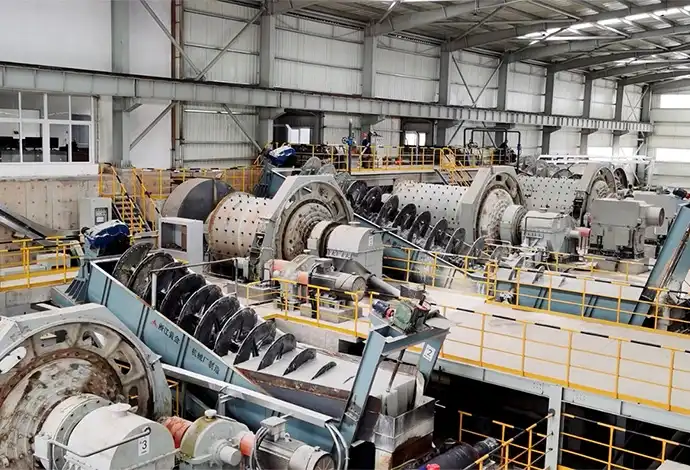
What makes quality grinding balls work well in different situations depends on what they're made of. High chrome steel balls have 10–30% chromium in them, which makes them very hard and resistant to wear. The round form of these balls stays the same longer than other options, so they grind in the same way for the whole time they're working. Low chrome steel balls, which usually have 1% to 3% chromium, work well and don't cost too much. This makes them perfect for uses that don't need high strength. Grinding material made of cast iron is used in some situations where cost is more important than performance. On the other hand, these balls tend to wear out faster and last less long than their steel peers. When procurement managers know about these important differences, they can make choices based on operational goals and spending limits.
Premium grinding media has a direct effect on how much energy and how fast the mill works. Research conducted by mining industry professionals demonstrates that high-quality grinding balls can improve grinding efficiency by 15-25% compared to standard alternatives. Better ball-to-ball touch, lower breaking rates, and keeping the sphere shape during the grinding process led to this improvement. Premium grinding media make it possible to get a uniform size distribution, which leads to better product quality. More regular particle sizes are good for factories that handle cement, chemicals, or mineral concentrates because they make the products work better and make customers happier.
To choose the right grinding balls media, you need to carefully evaluate your operational parameters and performance goals. There are many factors involved in this decision, from mill specifications to material properties and desired output targets.
When using a ball mill, the grinding media needs to be different from when using a rod mill or an autogenous grinding device. Depending on the size of the mill and the properties of the feed material, the best media size is usually between 20 mm and 125 mm in diameter. While smaller processes benefit from smaller media sizes, larger mills can usually handle larger grinding balls. Calculations of critical speed are very important for choosing media. Most industrial ball mills run at 75% of their critical speed, which makes the cascade motion perfect for grinding. The grinding media have to be able to handle the frequent impact forces that are created at these speeds while still being structurally sound.
For different uses, grinding media needs to have a certain amount of grit. To keep operations running smoothly and avoid unnecessary wear, grinding balls used in mines that process hard ores need to be harder than 60 HRC. Media with a hardness range of 58 to 63 HRC are usually used to make cement because they work well with a wide range of raw materials.
For each industry, here are the main things to think about when it comes to hardness:
Personalised grinding media options that are made to fit the needs of a manufacturing facility are very helpful. To meet the specific needs of each application, premium providers offer different diameters, changes to the chemical composition, and custom heat treatment methods. With this customising feature, buying teams can get the most out of grinding while keeping costs low. If you buy in bulk, you can save a lot of money and be sure that you always have media available. By building long-term relationships with dependable providers, you can get better deals on prices and be sure of on-time deliveries, which keeps your production running smoothly.
Through advanced production methods and strict quality control procedures, luxury grinding balls are set apart from normal ones by excellent manufacturing. Understanding these parts of manufacturing helps people who buy things figure out how good a seller is and how reliable a product is.
Modern casting methods make sure that each grinding ball has the same chemical makeup and mechanical qualities. Controlled cooling processes get rid of areas of high internal stress that could cause a part to fail too soon while it's in use. Heat treatment methods improve the spread of hardness from the surface to the core. This makes the material more resistant to wear while keeping its impact toughness. When compared to casting methods, forging creates thicker shapes out of materials, which leads to better mechanical qualities. Forged grinding balls, on the other hand, usually cost more because they are harder to make grinding balls and use materials more efficiently.
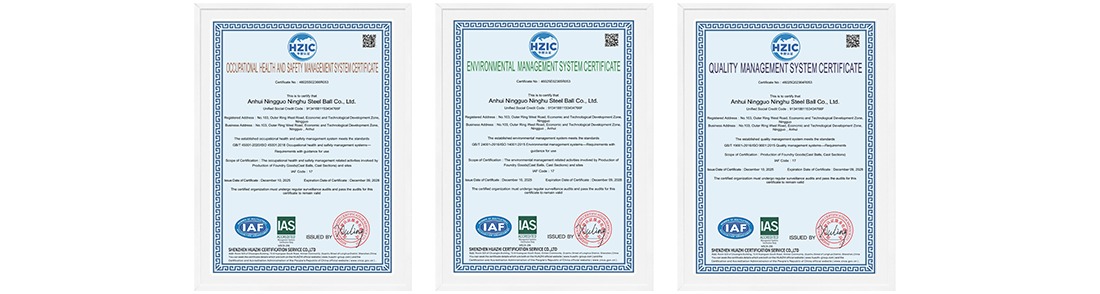
Getting ISO 9001 certification shows that a company is dedicated to quality management systems and methods for ongoing improvement. This approval makes sure that the ways things are made always meet quality and dependability standards set by the international community. ASTM compliance also makes sure that grinding media meets certain chemical and mechanical property standards set by experts in the field. Chemical analysis, hardness proof, impact resistance evaluation, and dimensional correctness evaluation are all parts of quality control tests. Every batch of products made by high-end makers goes through these tests, and they provide records of analysis that show they meet certain standards.
High chrome steel grinding balls are better at resisting wear because they have more chromium, which makes protective carbide structures inside the steel core. It takes longer for these balls to lose their round shape, and they wear down less quickly in rough rolling settings. Longer working times mean less media consumption and lower replacement costs due to the improved durability. Alternatives with less chrome are cheaper and can be used in places where high wear resistance is not necessary. These balls work well and don't cost too much, so they can be used in situations where the starting cost is more important than maximum durability.
Choosing the right media is only one part of getting the best grinding results. You also need to make sure that your operations are run in a way that is safe for workers and the environment.
Inspection procedures that are done on a regular basis find old grinding media before they hurt the mill's performance or pose a safety risk. Visual checking methods find surface cracks, excessive wear, or damage, which means the item needs to be replaced. Setting up regular replacement plans based on the number of hours worked or the amount of material handled guarantees consistent grinding performance. When grinding balls are stored correctly, they stay clean and don't get damaged before they are used. Rust doesn't form in covered storage places, and the quality of the media stays high even after long periods of storage. Impact damage to handling equipment should be kept to a minimum so that stress does not build up and the equipment fails early.
Mill charging operations must strictly follow safety rules to keep workers from getting hurt while installing media. Personal protective equipment, like hard hats, safety glasses, and steel-toed boots, is very important for keeping you safe when dealing with grinding media. Lockout/tagout processes make sure that mill systems don't get powered on while repair is being done. Regulatory compliance includes following the safety rules set by worker health and safety administrations in the workplace. Regular safety training programs keep workers up to date on the right way to do things and what to do in an emergency when they are grinding.
Grinding activities that are good for grinding balls, the environment uses media recovery programs to get back useful steel from used grinding balls. Recycling steel has a positive effect on the earth and can help operating budgets recover costs. There are a lot of providers that offer take-back programs that make recycling easier for their customers. Environmental management systems keep track of the resources that are used and the trash that is generated during grinding activities. These systems find ways to improve things so that they have less of an effect on the world while still being effective.
The supplier you choose has a big impact on the success of your grinding business through product quality, service reliability, and the benefits of a long-term relationship. Building ties with high-quality providers gives you a competitive edge that goes beyond the cost of the products themselves.
Consistent media supply ensures that production plans don't get thrown off by unreliable delivery. Premium providers make sure they have enough product on hand and have flexible transportation that can meet fast delivery needs. This dependability keeps production from being held up, which could cost a lot and hurt customer promises and income. Technical support services from expert providers improve working efficiency by giving advice on specific applications and helping with troubleshooting. These services are especially helpful when trying to improve speed or make grinding circuits work better.
NINGHU has been making wear-resistant materials for more than thirty years and has become a leading maker of high and low chrome casting grinding balls. Our modern factories have fully automatic production lines that can make 50,000 tons of goods every year and use cutting-edge production technology. Our ISO 9001 certification shows that we are devoted to following strict quality control rules that guarantee consistently high-quality products. The full service method includes consultations before the sale, tracking of progress during the sale, and technical help after the sale. This makes sure that customers are happy and the business is successful. Customisation lets companies in the cement and building materials, metallurgical mining, thermal power generation, and magnetic materials businesses make products that are perfect for their needs. This adaptability makes sure that the best performance and value are delivered in a wide range of operating settings.
Industrial sites that want to improve their operations and gain a competitive edge must invest in high-quality grinding balls. Better productivity, lower costs, and better product quality are all direct results of high-quality grinding media's better performance traits. Material science progress in chrome steel alloys gives it great resistance to wear and a longer useful life, which makes the higher price worth it by providing long-term value. These benefits are maximised by careful selection, regular repair, grinding balls and relationships with suppliers that support long-term business practices that meet safety and environmental standards.
Depending on the size of the mill and the features of the ore, mining uses usually require grinding balls with a diameter of 25mm to 125mm. Hardness values between 60 and 65 HRC are best for protecting against wear from rough materials. The choice of size depends on the size of the feed particles and the fineness of the product that is wanted.
To figure out the wear rate, you have to keep track of how much media is used over a certain number of tons or hours of work. Accurate data on usage is obtained by regularly taking and weighing the grinding media. Monitoring the mill's power use and product quality is another way to find out how well the media is working.
Steel grinding balls provide superior impact resistance and cost-effectiveness for most industrial applications. While ceramic media offers excellent wear resistance in specific applications, steel alternatives deliver better overall value through lower initial costs and reliable performance across diverse operational conditions.
NINGHU stands ready to enhance your grinding balls operations through premium grinding balls manufactured to exacting quality standards. Our comprehensive product range includes high chrome and low chrome steel options designed specifically for your industry requirements. With ISO 9001 certification and 30 years of experience making things, we deliver reliable grinding balls supplier solutions that optimise operational efficiency. Contact our technical team at sales@da-yang.com or sunny@da-yang.com to discuss customised grinding media solutions.
1. Bond, F.C. "Grinding Ball Size Distribution for Maximum Mill Throughput." Mining Engineering Journal, Vol. 45, No. 3, 1993.
2. Austin, L.G. and Klimpel, R.R. "Theory of Grinding Operations with Applications to Ball Mills." Industrial Minerals Processing Technology, 2nd Edition, 1989.
3. Morrell, S. "Predicting the Specific Energy Required for Size Reduction of Feeds in Grinding Mills." International Journal of Mineral Processing, Vol. 79, No. 2, 2006.
4. Wills, B.A. and Napier-Munn, T.J. "Grinding Media Selection and Mill Performance Optimisation." Mineral Processing Technology: An Introduction, 7th Edition, 2005.
5. Cleary, P.W. "Industrial Particle Flow Modelling Using Discrete Element Method in Ball Mills and Grinding Applications." Applied Mathematical Modelling, Vol. 30, No. 6, 2006.
6. Herbst, J.A. and Fuerstenau, D.W. "Mathematical Simulation of Dry Ball Milling Using Specific Power Information." Transactions of the American Institute of Mining Engineers, Vol. 254, 1973.
March 19, 2024
Deployed in a cement clinker grinding mill, these high-chromium cast grinding balls feature stable hardness and low breakage. They help us maintain consistent grinding output and lower long-term consumable costs.
June 24, 2025
Used in a copper-ore wet-grinding ball mill, the grinding balls show durable wear resistance under non-stop 24-hour operation. Stable grinding performance reduces frequent mill inspections for abnormal ball damage.
August 12, 2025
Used in an iron-ore grinding mill, these high-chromium cast grinding balls maintain uniform hardness from batch to batch. They withstand sustained heavy-load impacts well with minimal breakage, and reliable wear performance keeps our throughput steady over long operating cycles.
October 07, 2025
Adopted for a gold-ore grinding mill, these high-chromium cast balls have evenly distributed hardness. They hold up well under complex abrasive conditions, and their consistent wear profile helps us achieve fine, uniform particle size throughout service.
January 15, 2026
Applied in a limestone grinding production line, the cast steel balls perform reliably under fluctuating load conditions. Well-balanced wear characteristics effectively cut down unplanned downtime.