March 19, 2024
Deployed in a cement clinker grinding mill, these high-chromium cast grinding balls feature stable hardness and low breakage. They help us maintain consistent grinding output and lower long-term consumable costs.
Oct 30, 2024
In the world of industrial grinding and milling, efficiency and durability are paramount. One of the most significant advancements in this field has been the development and widespread adoption of chromium casting grinding balls. These high-performance grinding media have revolutionized the operation of ball mills across various industries, from cement production to mineral processing. Let's delve into the world of chromium casting grinding balls and explore how they enhance ball mill performance.
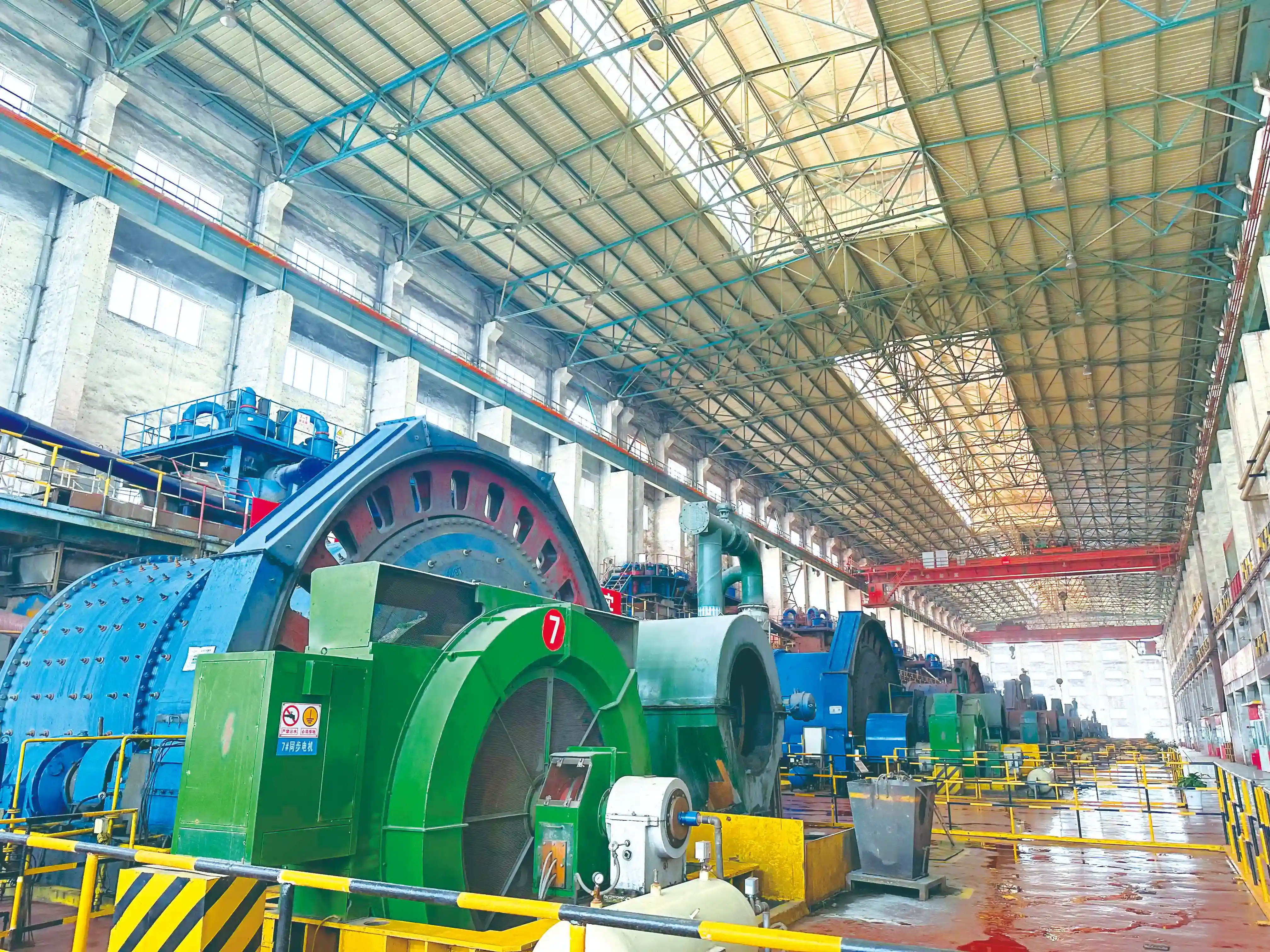
Chromium casting grinding balls are a marvel of metallurgical engineering. These spherical grinding media are composed of a carefully balanced alloy that typically includes iron, carbon, and a significant proportion of chromium. The addition of chromium imparts exceptional hardness and wear resistance to the balls, making them ideal for the demanding environment inside a ball mill.
The manufacturing process of chromium casting grinding balls involves precision casting techniques that ensure uniform composition and structure throughout each ball. This homogeneity is crucial for maintaining consistent performance over the lifespan of the grinding media. The casting process also allows for the creation of a wide range of ball sizes, typically ranging from 20mm to 150mm in diameter, to suit various grinding requirements.
The chromium content in these grinding balls can vary, usually between 1% and 30%, depending on the specific application and desired properties. Higher chromium content generally results in increased hardness and wear resistance, but it also affects other properties such as impact resistance and cost. Manufacturers like NINGHU have developed expertise in tailoring the chromium content to optimize performance for different industries and grinding conditions.
The incorporation of chromium casting grinding balls in ball mills brings about several performance improvements that contribute to increased efficiency and reduced operational costs:
These performance advantages make chromium casting grinding balls an attractive option for industries seeking to optimize their grinding processes. However, it's important to note that the optimal choice of grinding media depends on various factors, including the material being ground, desired particle size, and specific operational conditions.
The versatility of chromium casting grinding balls has led to their adoption across a wide range of industries. Some key applications include:
As industries continue to seek ways to improve efficiency and reduce operational costs, the role of chromium casting grinding balls in ball mill operations is likely to grow. Ongoing research and development in alloy composition and manufacturing techniques promise even better performance in the future.
In conclusion, chromium casting grinding balls have emerged as a key component in enhancing the performance of ball mills across various industries. Their unique combination of hardness, wear resistance, and grinding efficiency offers significant advantages over traditional grinding media. As companies strive for greater productivity and sustainability, the adoption of high-performance grinding solutions like chromium casting grinding balls will undoubtedly continue to expand.
For those interested in learning more about chromium casting grinding balls and how they can improve your specific milling operations, NINGHU offers a range of high-quality products tailored to various industrial needs. With over thirty years of experience in wear-resistant materials production, NINGHU is well-positioned to provide expert advice and solutions. To explore how chromium casting grinding balls can enhance your ball mill performance, don't hesitate to reach out to us at sunnyqin@nhgrindingmedia.com.
1. Aldrich, C. (2013). Consumption of steel grinding media in mills – A review. Minerals Engineering, 49, 77-91.
2. Liao, X., & Zhu, J. (2015). Mechanical properties of high chromium cast iron and its application in mining industry. Procedia Earth and Planetary Science, 2, 83-88.
3. Jankovic, A., Valery, W., & La Rosa, D. (2003). Fine grinding in the Australian mining industry. 3rd International Conference on Recent Advances in Materials, Minerals and Environment, Penang, Malaysia.
4. Magdalinovic, N. (2012). Grinding media quality influence on grinding efficiency. Journal of Mining and Metallurgy, Section A: Mining, 48(2), 177-185.
5. Peng, Z., & Hwang, J. Y. (2015). Microwave-assisted metallurgy. International Materials Reviews, 60(1), 30-63.
March 19, 2024
Deployed in a cement clinker grinding mill, these high-chromium cast grinding balls feature stable hardness and low breakage. They help us maintain consistent grinding output and lower long-term consumable costs.
June 24, 2025
Used in a copper-ore wet-grinding ball mill, the grinding balls show durable wear resistance under non-stop 24-hour operation. Stable grinding performance reduces frequent mill inspections for abnormal ball damage.
August 12, 2025
Used in an iron-ore grinding mill, these high-chromium cast grinding balls maintain uniform hardness from batch to batch. They withstand sustained heavy-load impacts well with minimal breakage, and reliable wear performance keeps our throughput steady over long operating cycles.
October 07, 2025
Adopted for a gold-ore grinding mill, these high-chromium cast balls have evenly distributed hardness. They hold up well under complex abrasive conditions, and their consistent wear profile helps us achieve fine, uniform particle size throughout service.
January 15, 2026
Applied in a limestone grinding production line, the cast steel balls perform reliably under fluctuating load conditions. Well-balanced wear characteristics effectively cut down unplanned downtime.