.webp)
.webp)
.webp)
.webp)
.webp)
.webp)
.webp)
.webp)
March 19, 2024
Deployed in a cement clinker grinding mill, these high-chromium cast grinding balls feature stable hardness and low breakage. They help us maintain consistent grinding output and lower long-term consumable costs.
Jun 28, 2024
Grinding Balls are fundamental crushing media utilized in ball plants for squashing and crushing materials. They are ordinarily utilized in the mining, concrete, and synthetic ventures for size decrease of different materials.
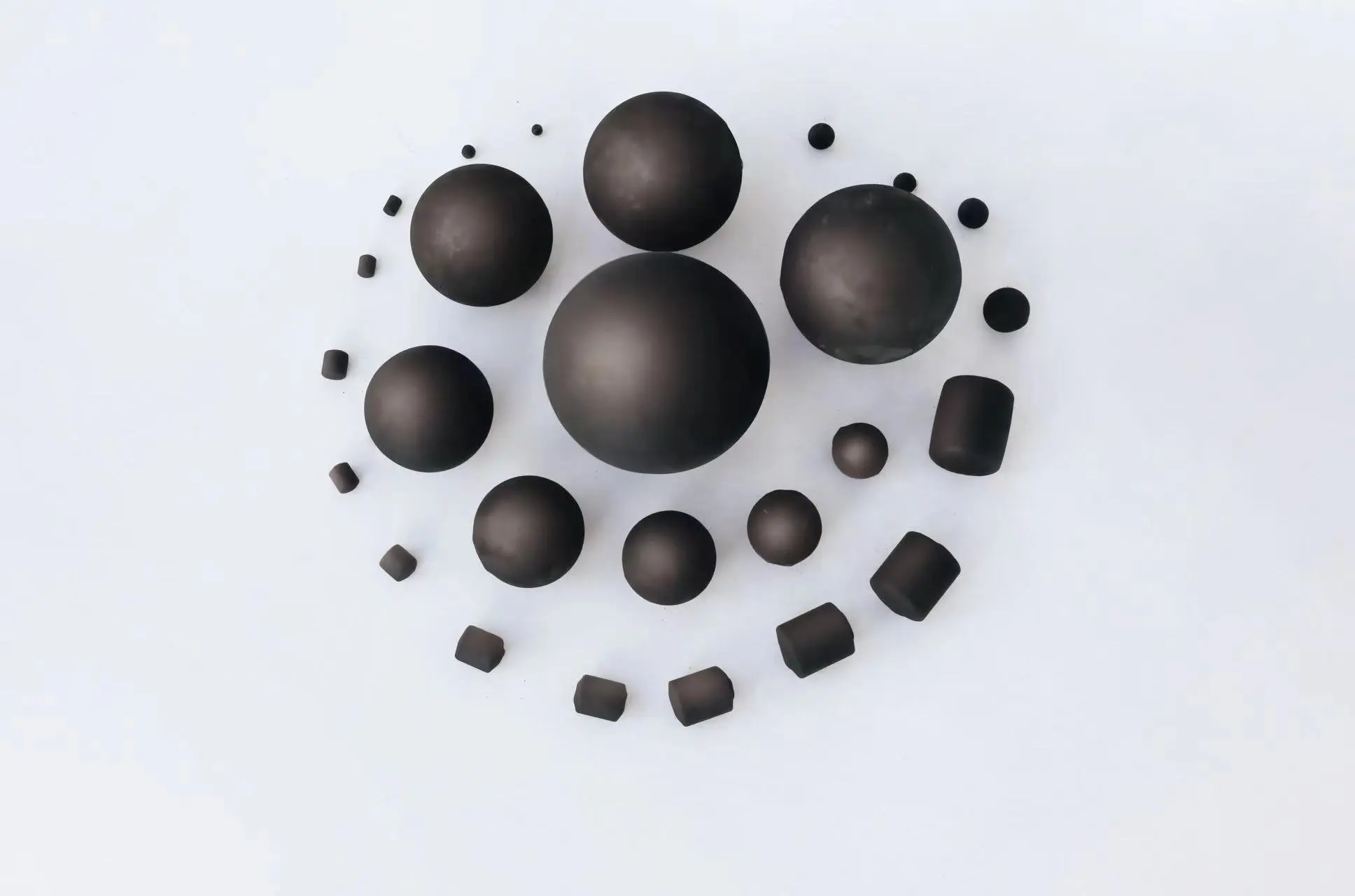
Steel, ceramic, glass, or rubber are some of the other materials used to make it. The material used is determined by the application and mill type. Because of their high strength, hardness, and resistance to wear, steel balls are the grinding media of choice most often.
The ball mill's efficiency and performance are influenced by the size and material of the product. The diameter of a it can range from 1 mm to 100 mm. The final product's fineness is also determined by the size of the it.
Grinding Balls assume a urgent part in the crushing system by influencing and pulverizing the materials to be ground. They help make the material smaller, which makes it easier to mix and homogenize and gives it more surface area. This, in turn, makes the grinding process work better and makes it easier to get the size and quality of the product you want.
There are various kinds of crushing balls accessible, for example, produced steel balls, cast steel balls, and fired balls. The advantages and properties of each type are distinctive. Ceramic balls are known for their high hardness and resistance to chemicals, while forged steel balls are long-lasting and suitable for materials with high impact and abrasiveness.
All in all, Grinding Balls are fundamental parts in the crushing system, and their choice assumes a critical part in deciding the proficiency and execution of the ball plant. With the ideal decision of crushing balls, businesses can accomplish better crushing outcomes, further developed item quality, and expanded creation productivity.
The material composition of it significantly impacts their price. Grinding Balls are typically made from high-quality steel, iron, or alloyed materials. The most common materials include:
The choice of material depends on the specific requirements of the milling process, including the hardness of the ore and the desired grinding efficiency. High-quality materials that offer better wear resistance and longevity will typically command higher prices.
Due to a variety of factors that influence the manufacturing process and material costs, the size and shape of Grinding Balls can have a significant impact on their price.
First, the price of it is directly influenced by their size, as producing larger balls requires more energy and materials. Bigger balls additionally will quite often have higher assembling costs as they require more unpredictable creation cycles to accomplish the ideal size and shape. As a result, they are larger typically have a higher price tag than smaller ones.
Price is also influenced by its shape. For example, circular balls are more normal and simpler to create, making them more financially savvy contrasted with unpredictably molded balls like ellipsoids or chambers. The development of non-round crushing balls might require particular hardware and strategies, prompting higher creation costs and, thusly, a greater cost for these special shapes.
Besides, the material used to produce the crushing balls likewise assumes a critical part in deciding their cost. Excellent materials, for example, produced steel or clay are more costly contrasted with lower-grade materials like cast steel or glass. The cost of the raw materials used to make it will affect how much they cost.
The price of it is also influenced by other elements like the manufacturing procedure, labor costs, and quality control measures. For instance, balls delivered utilizing progressed fabricating procedures, for example, hot rolling or fashioning might order a more exorbitant cost because of the accuracy and solidness presented by these cycles.
Besides, the interest and supply elements in the market can likewise impact the cost of crushing balls. The final cost of it can be affected by changes in market demand, fluctuations in material costs, and manufacturer competition.
All in all, the size and state of crushing balls, alongside the material utilized and producing processes, all assume a urgent part in deciding their cost. Factors, for example, creation costs, material quality, and market elements impact the valuing of crushing balls, making it fundamental for enterprises to painstakingly consider these variables while choosing crushing media for their applications.
The price of it is largely determined by the conditions of the market as well as the dynamics of the supply chain. A few outer elements can impact market costs:
Remaining informed about market drifts and keeping up areas of strength for with providers can assist organizations with exploring these variances and secure better evaluating.
All in all, the valuing of High Chrome Steel Grinding Media Balls is impacted by different elements, including material organization, size and shape, and economic situations. When it comes to purchasing grinding media, businesses that have a solid understanding of these aspects can ensure that they strike the best possible cost-performance balance.
Assuming that you are keen on our items, you can reach us at: sunnyqin@nhgrindingmedia.com
March 19, 2024
Deployed in a cement clinker grinding mill, these high-chromium cast grinding balls feature stable hardness and low breakage. They help us maintain consistent grinding output and lower long-term consumable costs.
June 24, 2025
Used in a copper-ore wet-grinding ball mill, the grinding balls show durable wear resistance under non-stop 24-hour operation. Stable grinding performance reduces frequent mill inspections for abnormal ball damage.
August 12, 2025
Used in an iron-ore grinding mill, these high-chromium cast grinding balls maintain uniform hardness from batch to batch. They withstand sustained heavy-load impacts well with minimal breakage, and reliable wear performance keeps our throughput steady over long operating cycles.
October 07, 2025
Adopted for a gold-ore grinding mill, these high-chromium cast balls have evenly distributed hardness. They hold up well under complex abrasive conditions, and their consistent wear profile helps us achieve fine, uniform particle size throughout service.
January 15, 2026
Applied in a limestone grinding production line, the cast steel balls perform reliably under fluctuating load conditions. Well-balanced wear characteristics effectively cut down unplanned downtime.